Fire & Rescue Physical Abilities Testing at Wintergreen
The Wintergreen PAT has been modeled as closely as possible after the “National Standard” for our industry. What makes Wintergreen unique is that our small staff size doesn’t allow us to move staff to less physically demanding roles as they grow older. Staff at Wintergreen start as firefighters, and end as firefighters, no matter their age or rank. To that end, rather than testing employees only at their time of hire, Wintergreen will continue to test every 6 months. Continued employment is conditional upon successful completion of this test. –Chief Curtis Sheets, 2012
Note: In addition to the eight timed stations described below, there is the “ladder climb station,” which is not timed. The ladder climb station is simply to verify that employees are not afraid of heights. It requires the employee to climb to the 80’ mark on the ladder boom. The climb and decent must be in one continuous motion.
ALL STATIONS MUST BE COMPLETED IN LESS THAN 15 MINUTES.
Your blood pressure and pulse will be taken before and after the test. Those with too great of a variance between vital sets may be asked to repeat the test at a later date.
There will be an evaluator walking next to you from the time you finish the initial station, until you complete the test. This person is there to answer any questions or to help you reposition your weight vest.
RULE NUMBER ONE – DON’T GET HURT! If you feel as if you are about to black-out, tell your evaluator, and stop as long as you need to. Your time however; will continue to accrue.
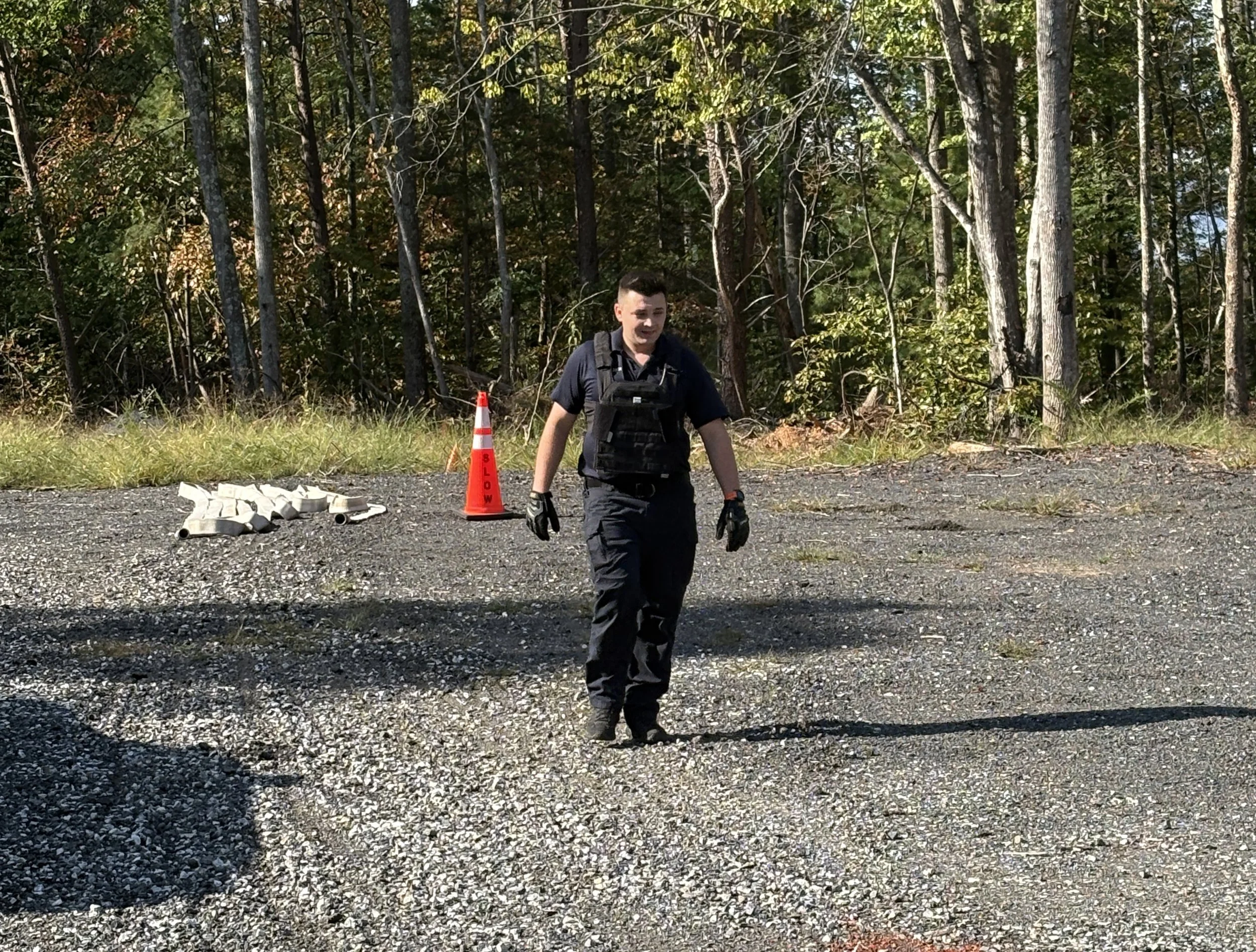
Obstacle One - Walk
Wearing a 50lb weighted vest, personnel will walk three laps around cones spaced 200’ apart.
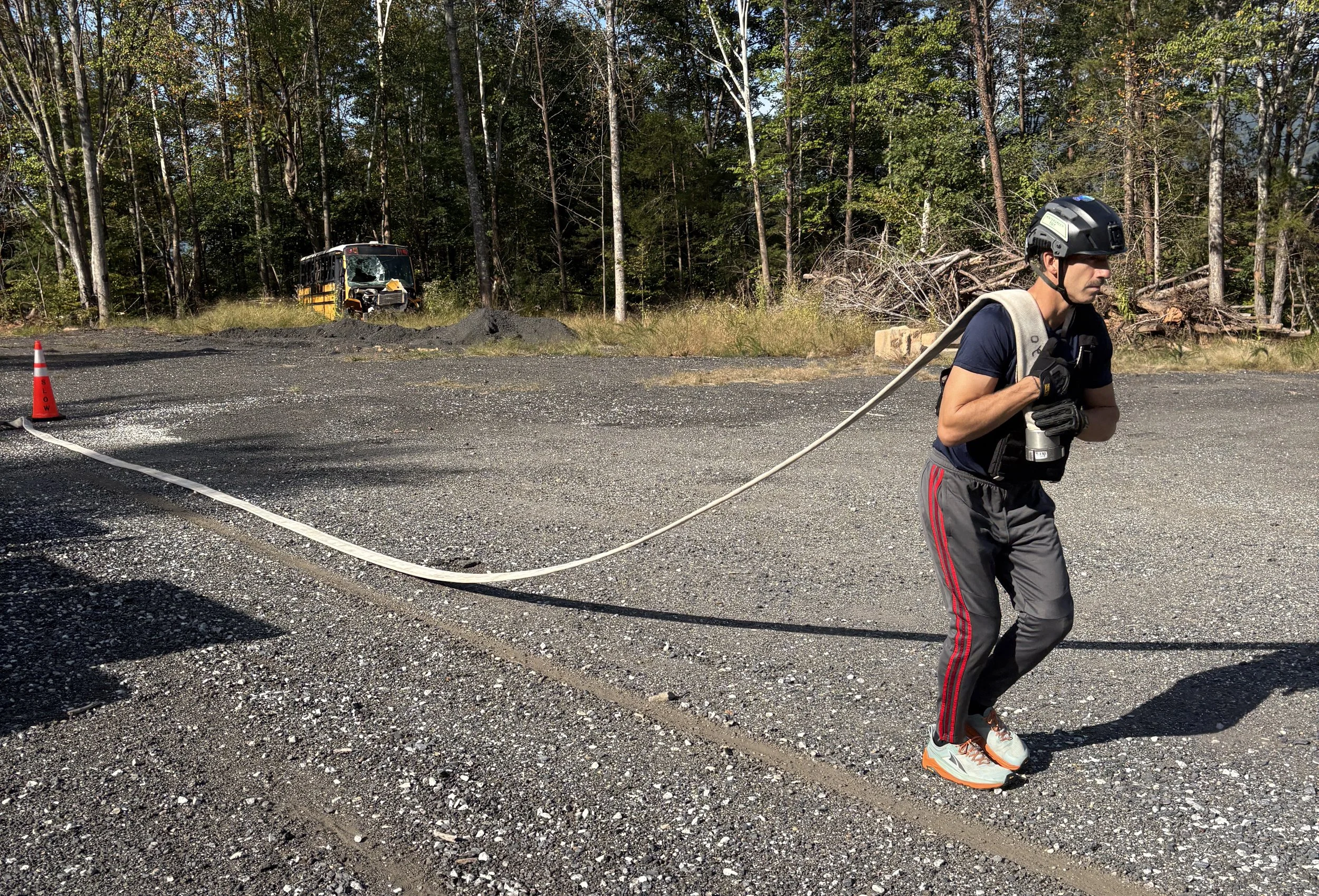
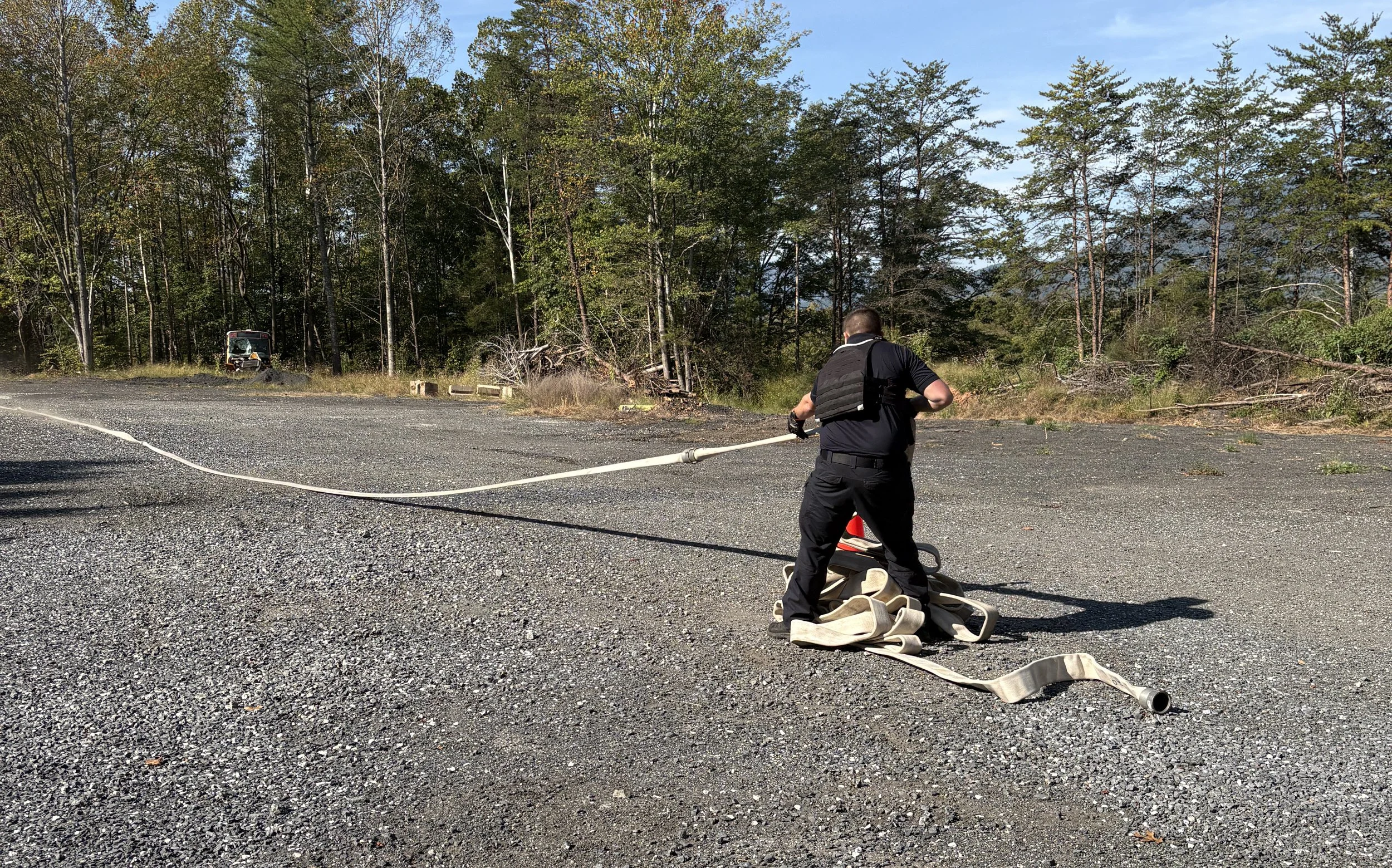
Obstacle Two - Hose Drag
Wearing a 50lb weighted vest, personnel will drag 300’ of 3” hose to cone that is 200’ away and then pull through two couplings.
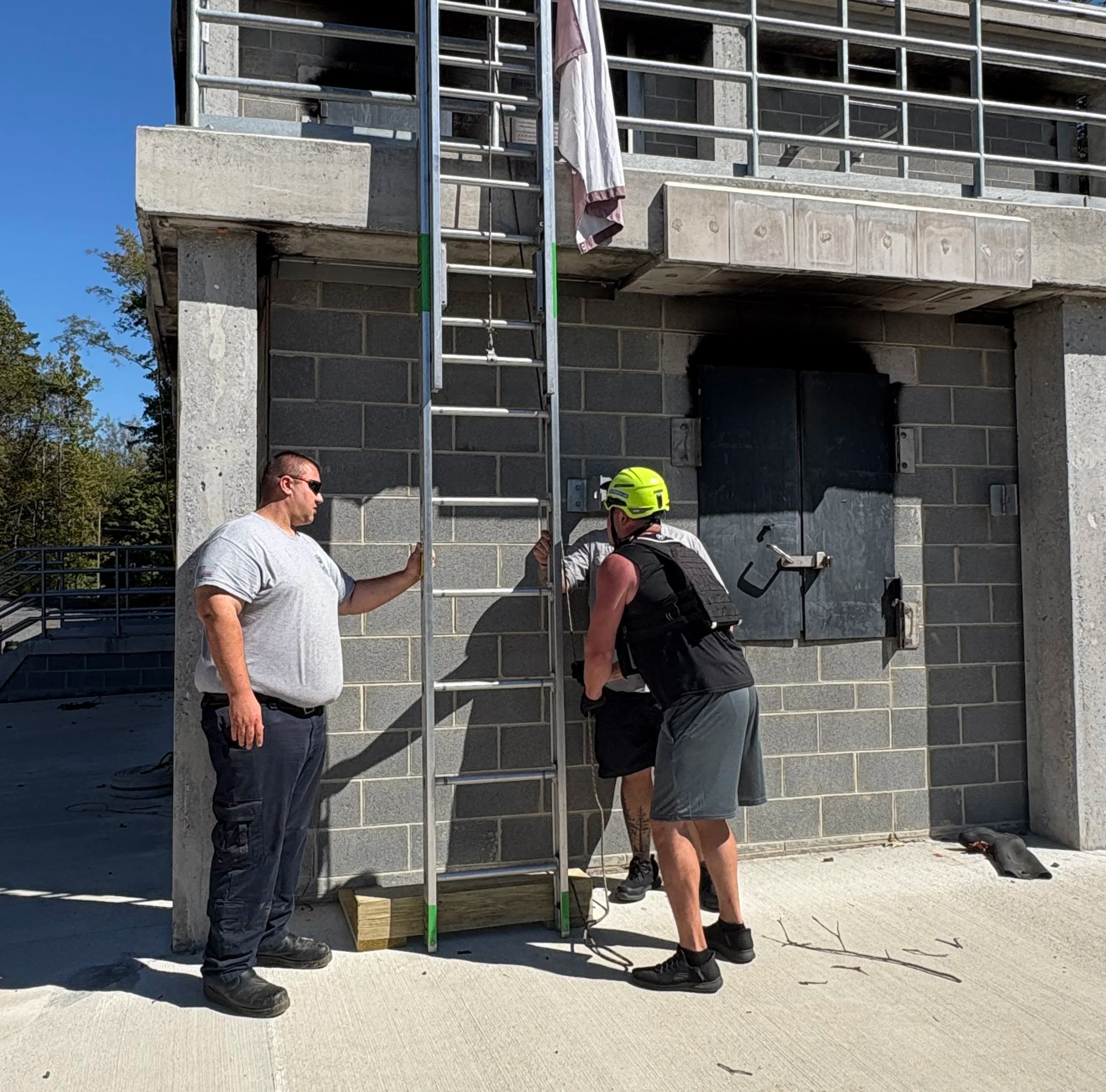
Obstacle Three - Ladder Raise
Wearing a 50lb weighted vest, lift a 24’ “Fire Grade” aluminum extension ladder. Carry the ladder for approximately 30’, maintaining control at all times. Heel the ladder against a structure using provided wood blocking and using a hand-over-hand continuous motion, completely raise and then lower the fly section of the ladder.
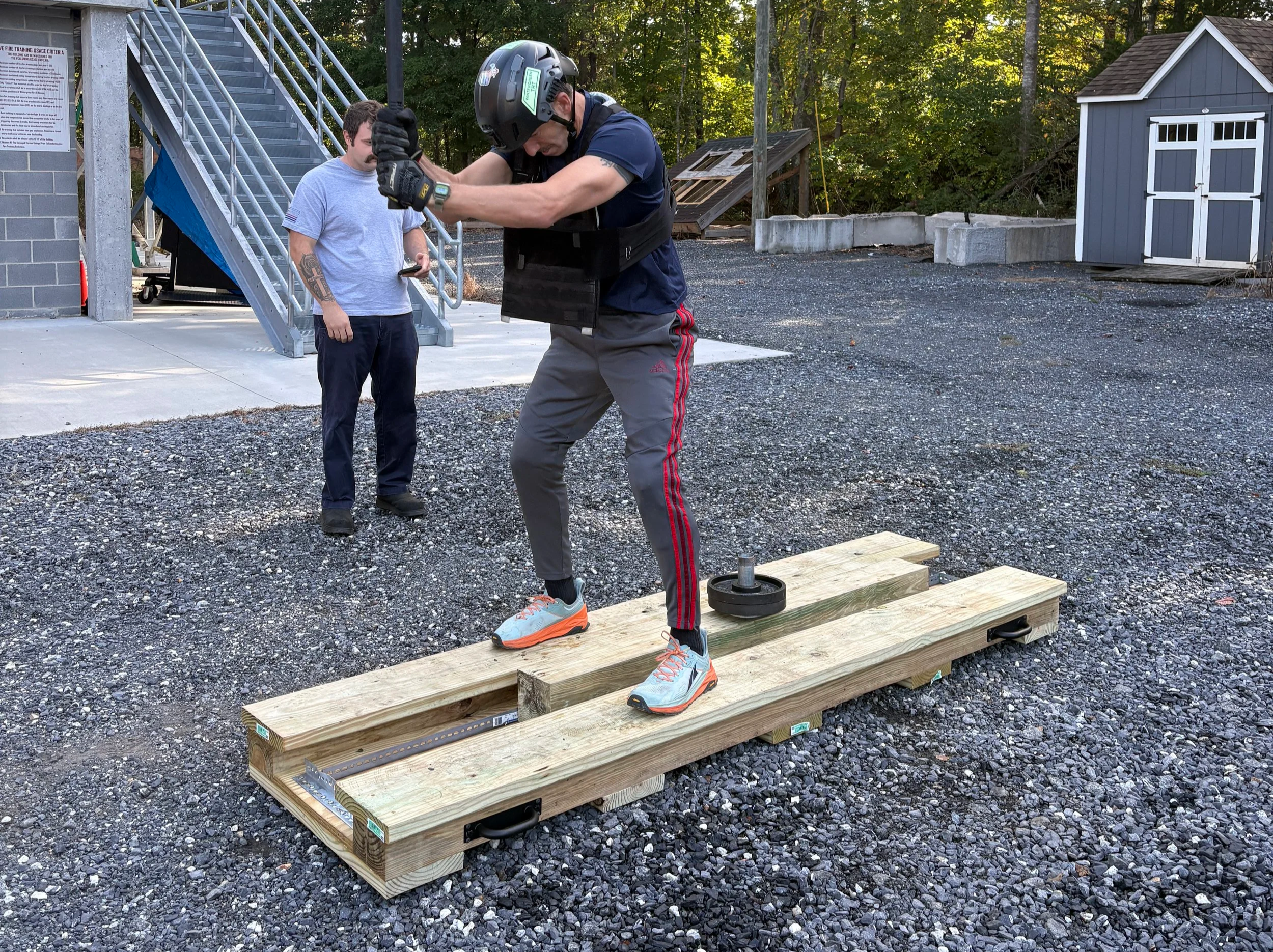
Obstacle Four - Keiser Sled
Wearing a 50lb weighted vest, use a 8lb dead blow sledge hammer to strike the end of the wood to move the sled to the opposite end, approximately 7 - 10 strikes. 20lbs (10x2) of weight are added to sled for resistance.
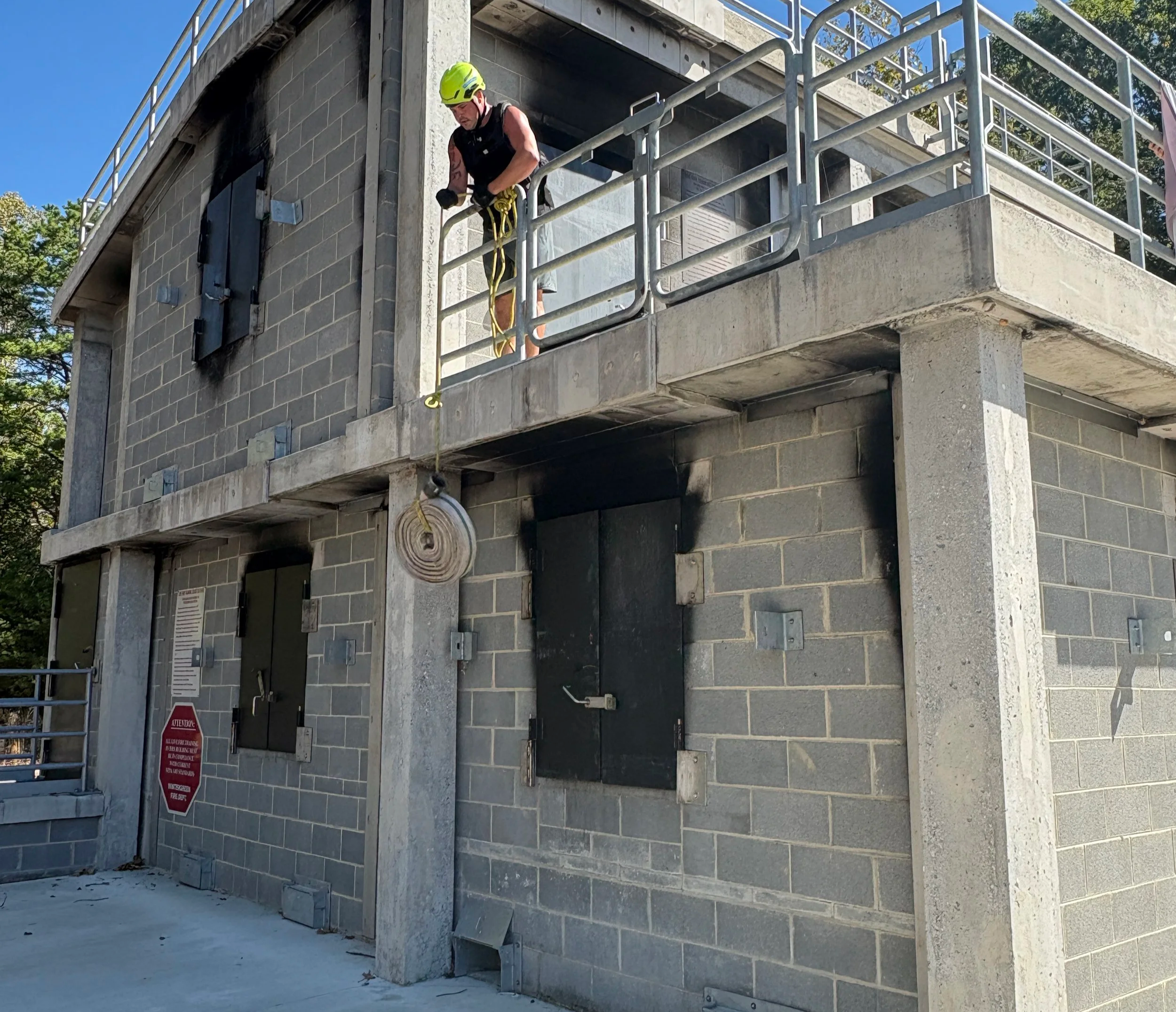
Obstacle Five - Hose Hoist
Wearing a 50lb weighted vest, lift 1 section of 3” hose up one story until you get to the loop that is tied in the rope. Lift hand over hand and then lower hand over hand. Raise and lower to the ground two times.
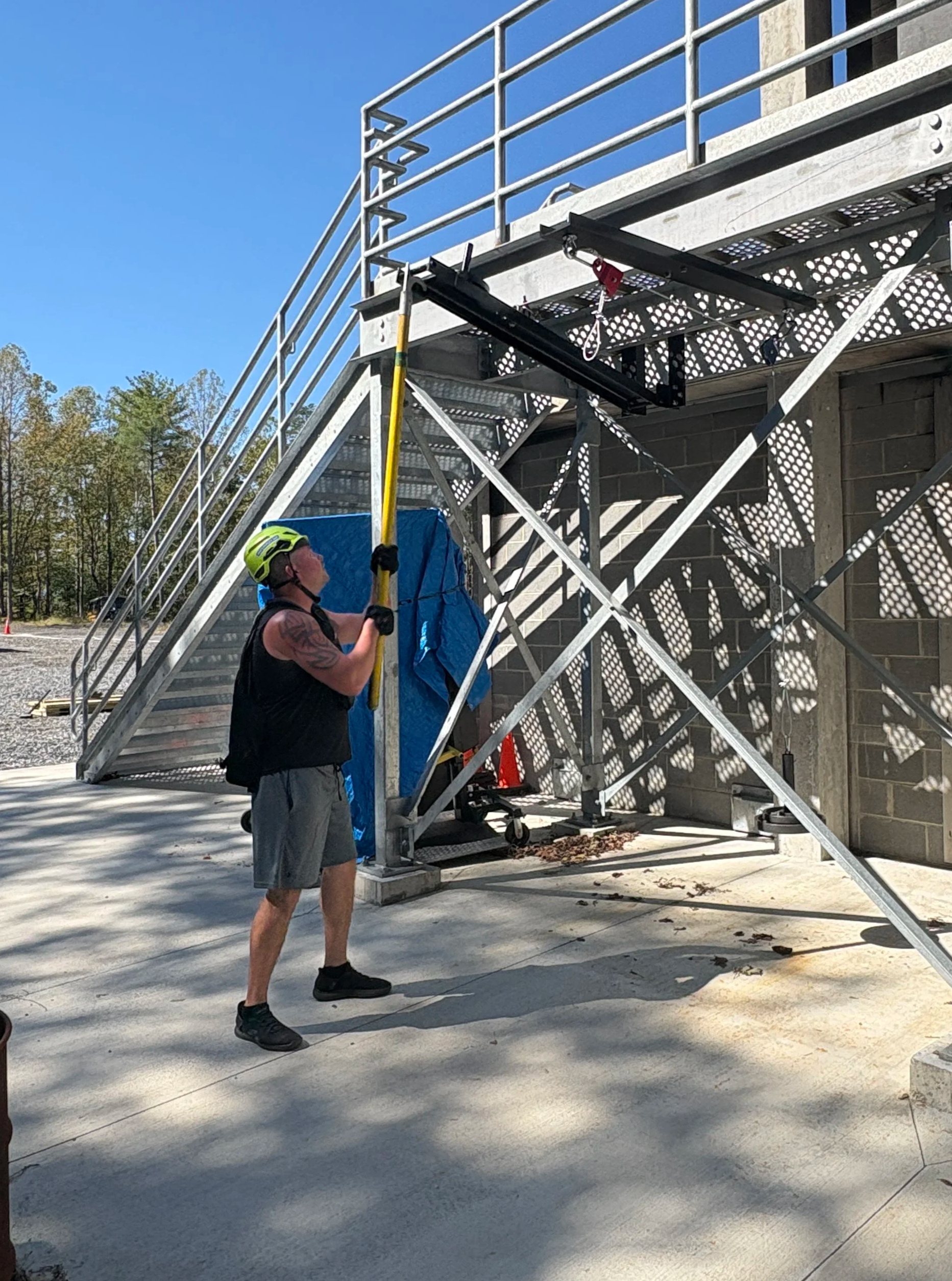
Obstacle Six - Push/Pull
Wearing a 50lb vest, use a six foot Pike-Pole or five foot New York Hook to raise a 60lb weight approximately 1.5 feet. The weight will be suspended approximately 8-ft above the ground. The weight must be raised five times. Next, using the same Pike-Pole or New York Hook, hook a cable loop with 40lbs (25x1, 10x1, 5x1) of weight (approximately 60lbs force) which will again be approximately 8-ft off the ground and pull it down. Pull the weight down approximately 1.5 feet, three times. DO THREE SETS. Do not drop the pole.
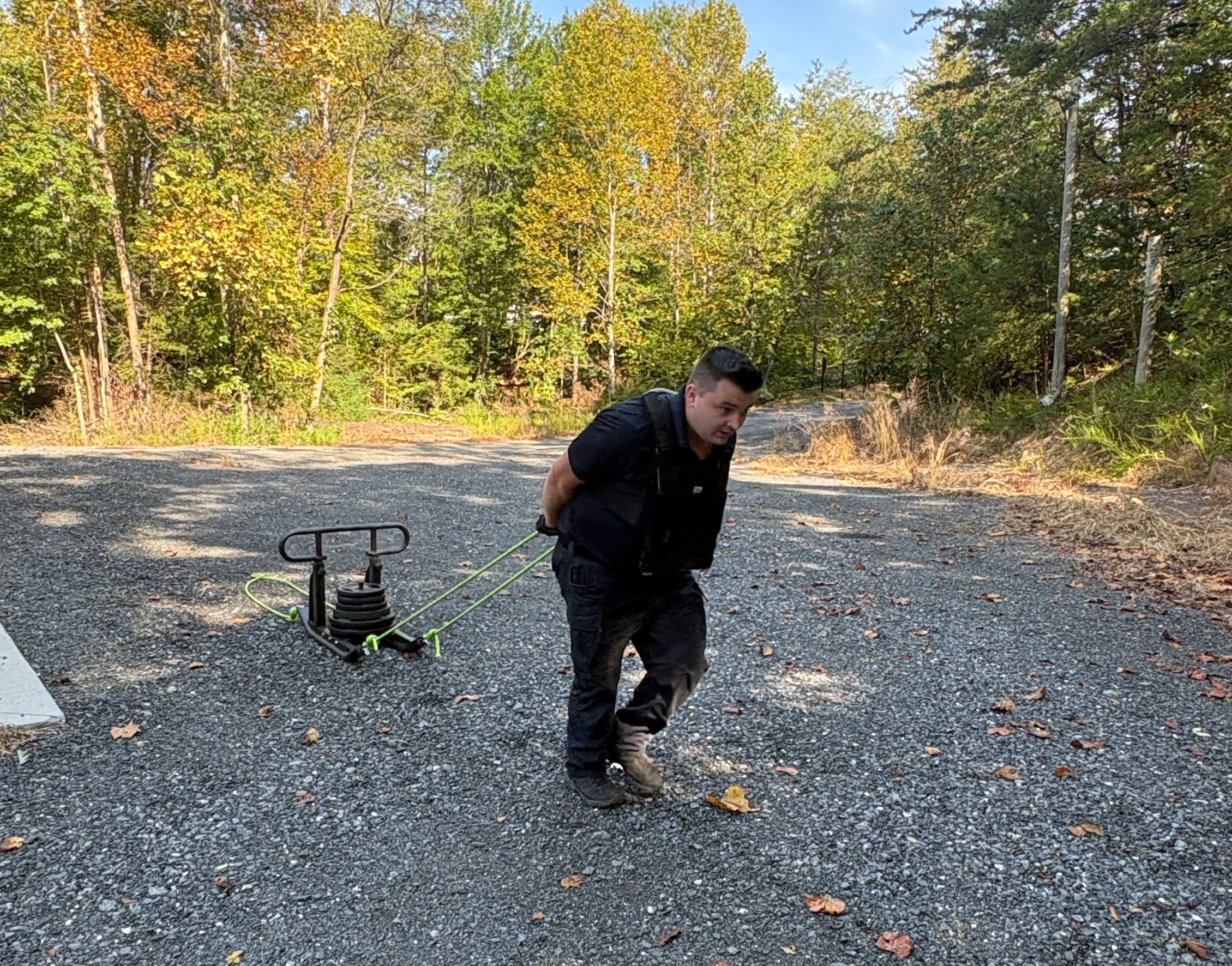
Obstacle Seven - Dummy Drag (sled)
Wearing a 50lb weighted vest, drag a sled using provided rope approximately 75 feet with 105lbs (25x4, 5x1) of weight added for resistance to simulate a dummy drag. Once you have reached the cone go to the other side of the sled and grab the rope and drag it back to where you started.
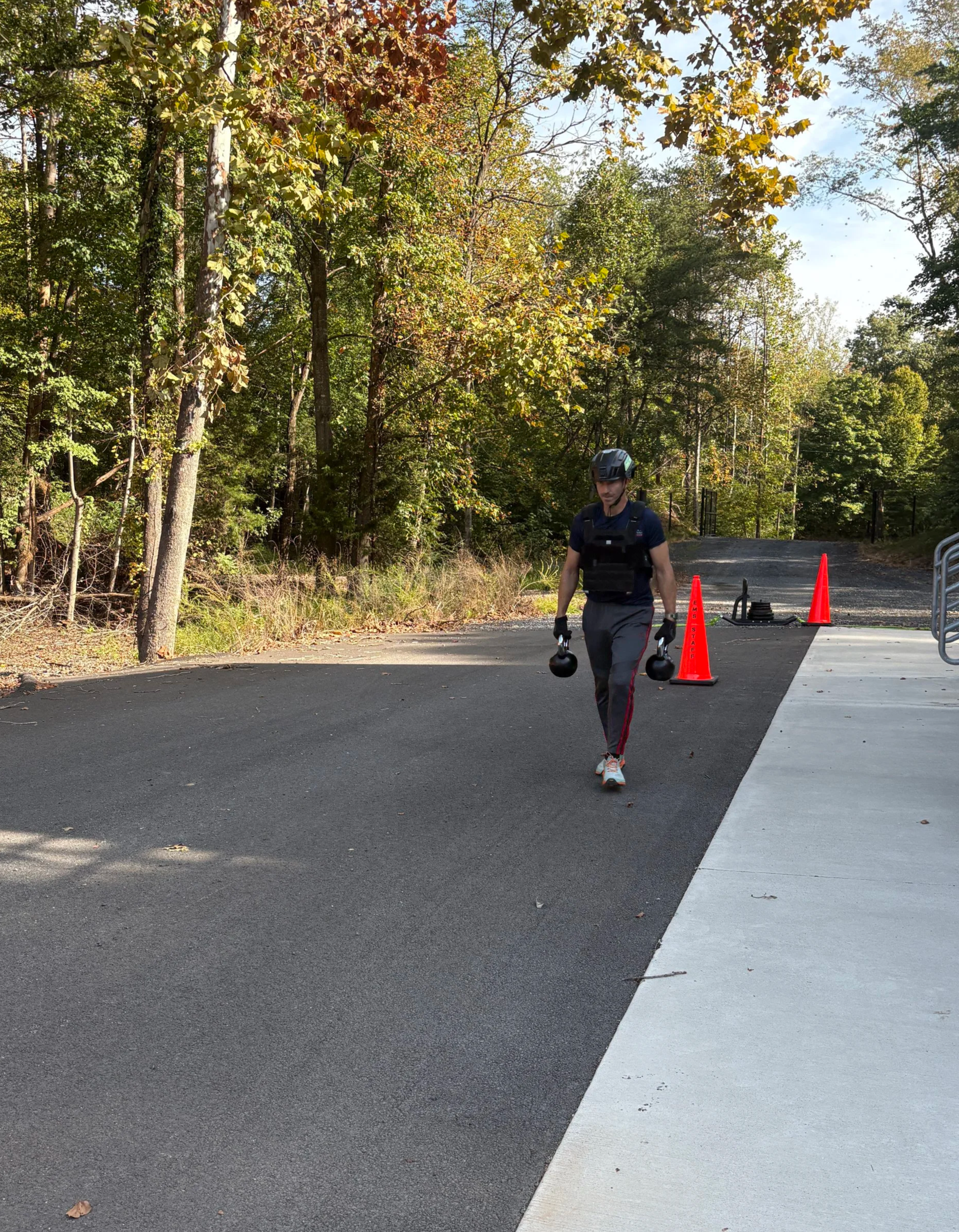
Obstacle Eight - Tool Carry
Wearing a 50lb weighted vest, pick up two 30lb kettlebells and walk 40 feet around cone and then return back to the starting cone and set kettlebells down, do not drop. This will end your time.